

South Falls at Silver Falls State Park: An Oregon Waterfall Day Trip
A South Falls-focused day visit to Silver Falls State Park during our Allegiant-supported Oregon trip, with walk-behind waterfall views and practical planning notes.
Read the story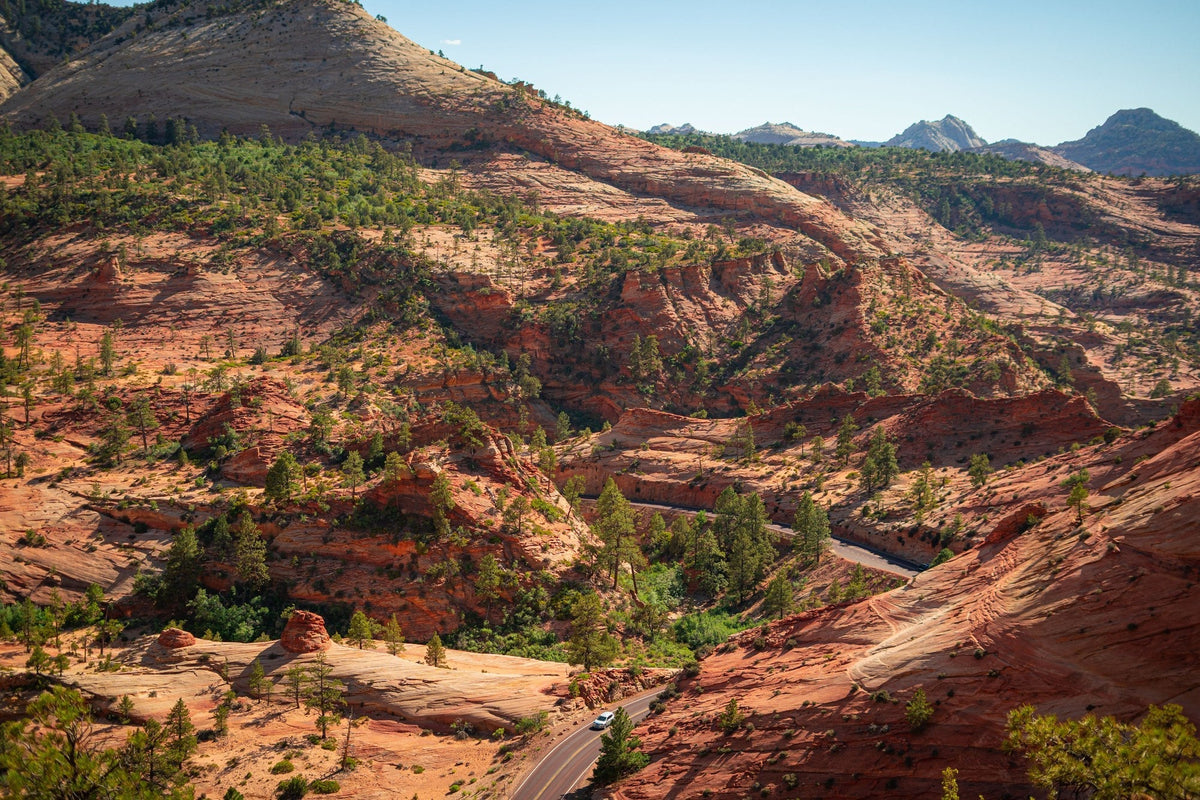
Our Zion trip included an east-side drive, roadside stops and sunset at Canyon Overlook, with Cedar City as our base.

We came into Zion from the east, and the drive was a big part of the experience. Before reaching the park, we saw bison in fields along the way. Once inside, we stopped at pull-offs to explore and take photographs, then drove through the tunnel. We were staying in Cedar City for this part of the trip.
Our favorite hiking stop was Canyon Overlook, where we spent time around sunset. I have never hiked Angels Landing. For me, this visit was about the drive, the shorter walk and getting to experience different parts of the park, not checking off its most famous hike.
Our Canyon Overlook outing is one part of a wider Zion visit. For your trip, you might choose that shorter hike, spend the day in the main canyon or plan around a more demanding route. Angels Landing and The Narrows are not the only reasons to come.
People have lived in this area for thousands of years. The park’s history includes the Ancestral Puebloan and Fremont peoples, followed by Southern Paiute communities with enduring connections to the land. Federal protection began as Mukuntuweap National Monument in 1909, before Zion became a national park in 1919. The NPS history overview is a useful introduction before your trip.
The roads also tell part of the park’s story. The Zion-Mount Carmel Highway opened in 1930, connecting travelers with other destinations across southern Utah and northern Arizona. Its tunnel remains an important link between the main canyon area and the east side. Knowing that layout helps when you are planning Zion as part of a trip that also includes Bryce Canyon or the Grand Canyon.

Zion is in southwestern Utah. Springdale is the gateway to its south entrance and the Zion Canyon Visitor Center. The east entrance provides access along the Zion-Mount Carmel Highway. Your arrival direction matters: a road-trip approach from the east is different from starting a day beside the main canyon in Springdale. See NPS directions and transportation information.
Large vehicles now face restrictions on the Zion-Mount Carmel Highway between Canyon Junction and the east entrance. If you are bringing an RV, bus or trailer, check the official vehicle limits before choosing your approach.

Zion Canyon is the main destination for the park shuttle and access to several well-known trails. The east side offers a different landscape along the Zion-Mount Carmel Highway; it is not an extension of the canyon shuttle route. Check the park’s transportation information before deciding how to connect them. Plan your route with NPS.
Canyon Overlook gives you a shorter hike to a viewpoint above the canyon. The one-mile round trip is rated moderate, with uneven rocky terrain and very limited parking. Short does not mean effortless or suitable for everyone. Review the official trail description.
For more on that walk, see our Canyon Overlook guide.
The park shuttle is free, and no shuttle reservation is required. During shuttle season, private vehicles generally cannot use Zion Canyon Scenic Drive, including before and after the day’s shuttle service. Limited authorized exceptions apply. This restriction should not be confused with access along the separate Zion-Mount Carmel Highway.
The Springdale shuttle operates outside the park; the Zion Canyon shuttle operates inside it. Leave time for parking, walking and waiting, and check the last return service before setting out. Schedules change seasonally, so use the current NPS shuttle page instead of relying on an old timetable.
You do not need a reservation to enter Zion, although the park entrance fee still applies. Some activities have separate permit requirements. Check NPS permits and reservations.
Choose a hike based on your preparation and the conditions, not because it appears on a must-do list.
My suggested approach is to make the main canyon your priority, with one suitable walk and time to enjoy the scenery. Check conditions at the visitor center, account for the shuttle journey and avoid scheduling every hour tightly.
Treat an east-side drive or Canyon Overlook as an optional addition, not a guaranteed final stop. Parking, traffic, daylight and your group’s energy may make a separate day more enjoyable. If Angels Landing or The Narrows is your priority, plan around that activity rather than squeezing it between several other stops.
The best season depends on what you want to do. Spring brings changing conditions and the possibility of high river flows; summer brings heat and busy trails; fall offers a different balance of temperatures and daylight; winter can bring snow and ice. A season that suits sightseeing may not suit a particular hike. Review Zion’s seasonal conditions.
Stay on permitted routes, respect barriers and keep back from drop-offs. Leave enough time and energy for the return from any hike.
A South Falls-focused day visit to Silver Falls State Park during our Allegiant-supported Oregon trip, with walk-behind waterfall views and practical planning notes.
Read the story
The cave opening and Oregon coastline.Our Oregon Coast stop included sea lions on the rocks, time inside the cave, coastal viewpoints and a few favorite...
Read the story
A photo-led look at Weavers Needle from Fremont Saddle, with a Peralta Trail hiking option, preparation advice, and practical desert photography tips.
Read the storySign up for new stories, photographs, and notes from the road.
Join the conversation